
WHAT TYPE OF FLOORING SHOULD I BUY?
Laminate
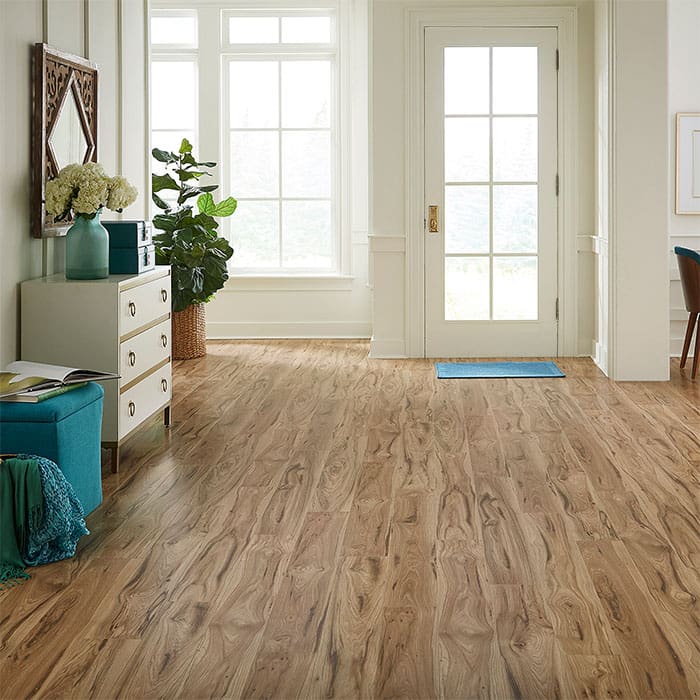
Originally created as an affordable alternative to hardwood, laminate flooring was specifically designed to mimic the look of real wood. Laminate is a multi-layer synthetic flooring, often composed of materials like melamine, fiber board, wood, and plastic, which are fused together to form an incredibly tough product. It is finished with a top layer that features a photographic image sealed with a hard protective topcoat. Laminate is one of the strongest, most scratch-resistant and impact-resistant materials available, which is why it is such a popular choice for households with animals and children. Laminate flooring is available in a wide variety of wood grains, widths and finishes, from traditional oak to exotic bamboo.
INSTALLATION & CARE
Before installation, always thoroughly read and adhere to the installation instructions and maintenance guidelines provided by the manufacturer. Laminate is typically available in easy-to-use interlocking planks that click together securely, requiring no nails, grout, or adhesives. This type of installation is referred to as a “floating floor”, because the laminate is not secured to the subfloor underneath. Laminate can often be installed over existing flooring, as long as the subfloor is sound, level and has no moisture issues. Proper maintenance of laminate flooring requires regular cleaning with a dust mop, broom, or hard floor vacuum, which will help prevent abrasive dirt from scratching the floor's surface layer. You can also use a damp mop with water only. If you need a more thorough cleaning, you can use a solution of water with vinegar or a non-sudsing ammonia. Do not pour liquid directly on floor. Although most brands of laminate are either waterproof or have a moisture-resistant topcoat, it‘s still best to clean up spills quickly. Never use a steam cleaner on laminate floors. To help prevent scratches from daily activity, it’s a good idea to put protective felt pads under the legs of furniture.
Pros & Cons
Laminate is a very cost-effective flooring option. It is one of the most durable types of flooring available, which makes it a smart choice for people with high-traffic households. It is an extremely tough flooring that if properly cared for, will perform well for many years. Unlike solid or engineered hardwood flooring, laminate cannot be sanded or refinished. Length of acclimation time can vary by manufacturer, but for best results, acclimate 48-72 hours prior to installation.