
Cookware
Buying Guide
How to Choose the Best Pots and Pans

The Anatomy of Cookware: Understanding Key Components
Understanding the anatomy of your pots and pans will help you choose the best cookware for your cooking style and stovetop. Below is a breakdown of the essential features that determine the performance, durability, and safety of your kitchen gear.
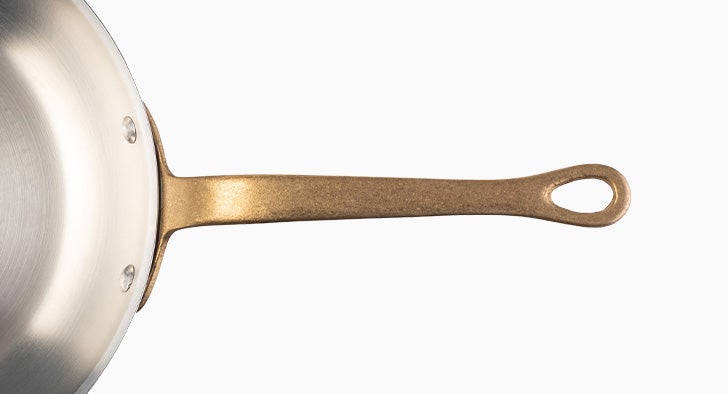
Handle
For optimal safety, select handles that offer a secure grip and stay cool to the touch. Long, hollow, or textured stainless steel, wood, and silicone designs provide the best heat-resistant on stovetops, dissipating heat quickly during high-temperature cooking.
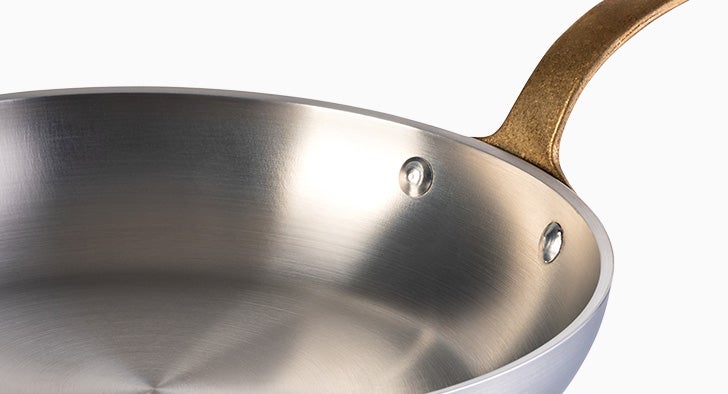
Rivets
These rugged metal fasteners permanently attach the handle to the pan’s body, ensuring maximum strength and stability. Premium cookware utilizes stainless steel or aluminum rivets, whereas some budget alternatives use screws or welded joints that can weaken over time.
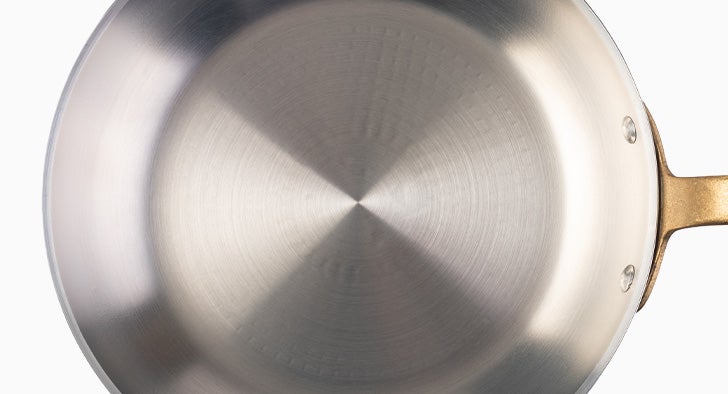
Cooking Surface
The surface is the interior layer that touches your food. Popular materials include durable stainless steel, classic carbon steel, rugged cast iron, ceramic, heat-conductive aluminum, copper, and easy-clean nonstick coatings.
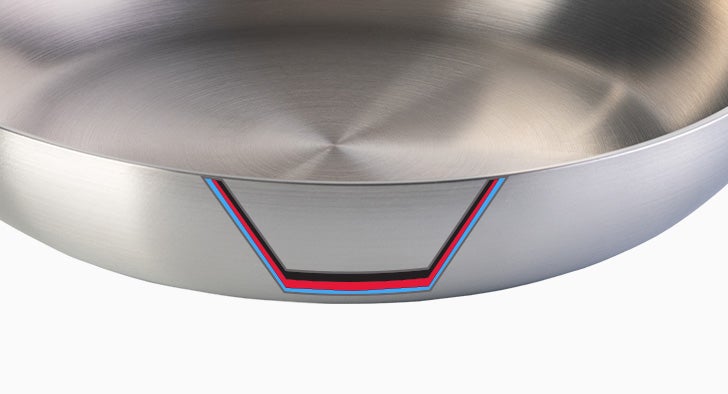
Core
The hidden internal layer sandwiched between the cooking surface and the exterior base. The primary conduit for heat distribution, high-quality cores feature multiple layers of metals like aluminum or copper (known as fully clad cookware) to eliminate hot spots.
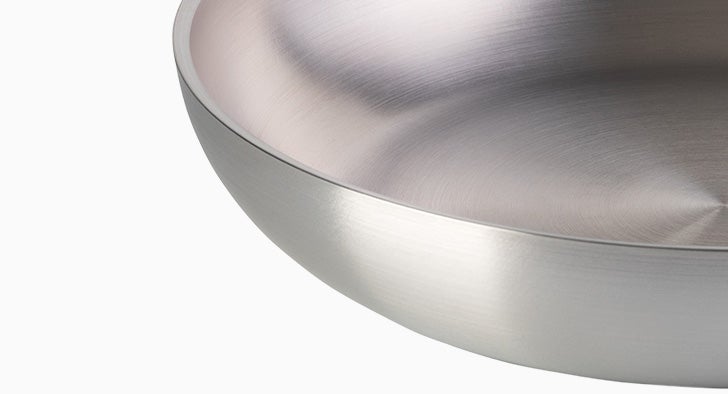
Sides
The vertical walls of your cookware dictate its function. Pots and pans with high sides (like stock pots) are designed to contain large volumes of liquids, while low-sided pans (like fry pans) optimize moisture evaporation, frying, and flipping ingredients.
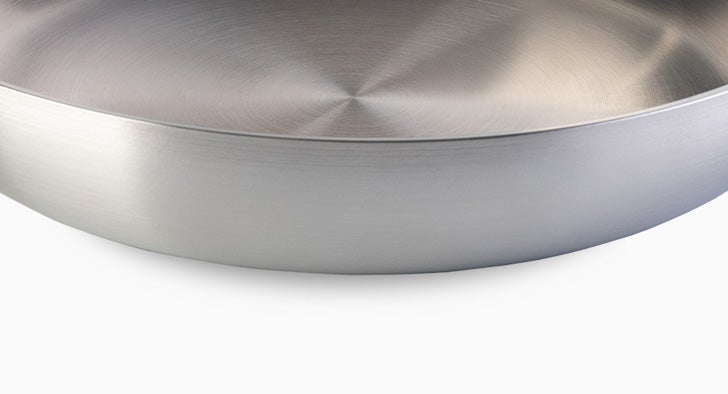
Base
The base is the bottom exterior of the pan that rests on the burner. For glass-top or electric ranges, a flat, heavy base prevents warping. For induction cooktops, a magnetic stainless-steel base is required to activate the heating surface.
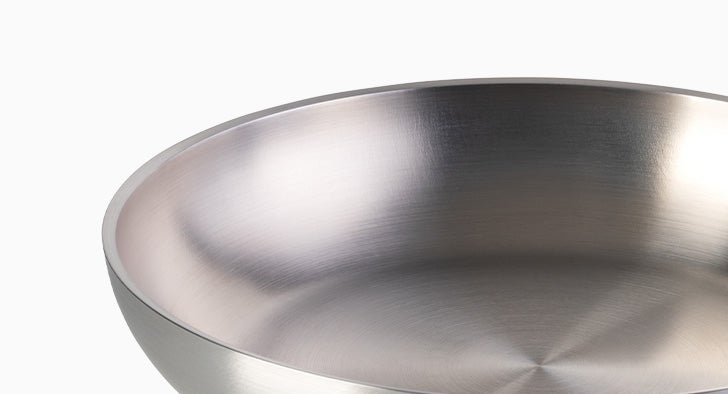
Rim
The rim is the upper edge of the cookware. Straight rims are ideal for containing and flipping food, whereas pots and pans with a flared or rolled rim are better for drip-free pouring of sauces and broth.