

Foods of fortune
The culinary traditions of Lunar New Year celebrate good fortune and a fresh start
The culinary traditions of Lunar New Year celebrate good fortune and a fresh start
Eating for health
Eating for wealth and prosperity
Many foods served throughout Lunar New Year are in the shape of coins or money in an effort to bring good financial fortune. Various versions of small glutinous rice cakes resemble coins. Egg rolls and spring rolls are also staples, as their rectangular shape resembles gold bars.
Dinner tables throughout China often feature a whole fish or chicken served at the table with head and tail intact in an effort to bring wealth and abundance to the entire family. (Also, the Chinese word for abundance sounds similar to the word for fish.)
Costco member Holly Ong, founder of Sibeiho, a Singaporean condiment company, notes that food is such an integral part of the holiday in Singapore that there’s barely any room on the table for anything else. “[In Singapore], this is often the only time of year workers have off, so it makes it even more special,” she says.
Cookbook author Hetty McKinnon, who is Cantonese, says that the foods of the holiday can vary between areas. For instance, in Zhongshan prefecture, where her family is from, gok jai dumplings are stuffed with a savory filling, then steamed, while in neighboring Taishan, they are sweet and deep-fried.
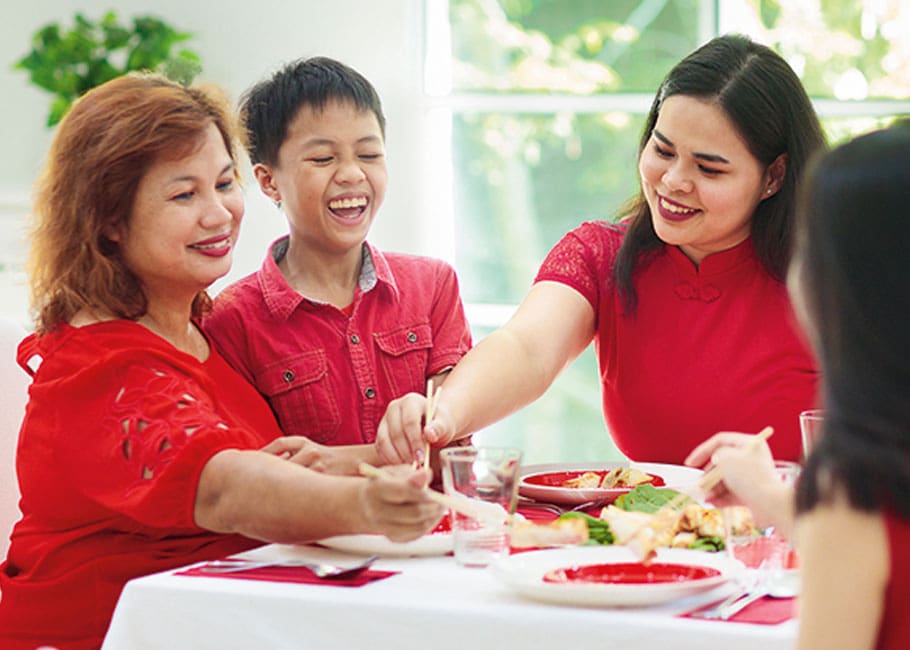
No matter which traditions you practice or foods you choose to serve for Lunar New Year, much of it revolves around getting together with loved ones and creating a good foundation for the next 12 months.
“It’s a time for reflection and being with your family,” says Filipino American chef Dale Talde, who spent several years working in Cantonese kitchens.