Skip to Main Content
Dyson V15 Detect Total Clean Extra Cordless Stick Vacuum - $499.99 After $290 OFF
Costco US homepage
  • Photo
Type and press the down arrow to browse search suggestions

Costco Hearing Aid Center

Why Buy Hearing Aids at Costco?
The price you SEE is the price you PAY!
  • Free Hearing Test
    INCLUDED
  • Free Service Appointments†
    INCLUDED
  • FSA and HSA Eligible
  • Premium Technology
  • Up to 4% in Rewards*
*Terms and conditions apply. See calculator for details. **Test for member 18 years of age or older to determine if you can be helped by hearing aids. †For hearing aids purchased from Costco Hearing Aid Center.
Prepare for your Appointment
In preparation for your hearing test appointment please fill out and print the patient intake form. Bring this completed form with you to your appointment to speed up your check in process. (If no printer is available please arrive early to complete the form at the warehouse.)
Hearing Aid Accessories

Hearing aids accessories enhance overall performance by allowing users to stream phone calls and TV audio directly to their devices. Additionally, these accessories improve communication in social settings by focusing on the speaker’s voice, making everyday activities more engaging.

Types of Hearing Aid Accessories
bluetooth logo
Bluetooth Accessories
Hearing aid accessories are designed to enhance your hearing aids’ overall performance, allowing you to effortlessly integrate your hearing aids into your daily life. These accessories offer many benefits, like improving communication over the phone, making TV viewing more enjoyable, and sharpening your conversational skills.
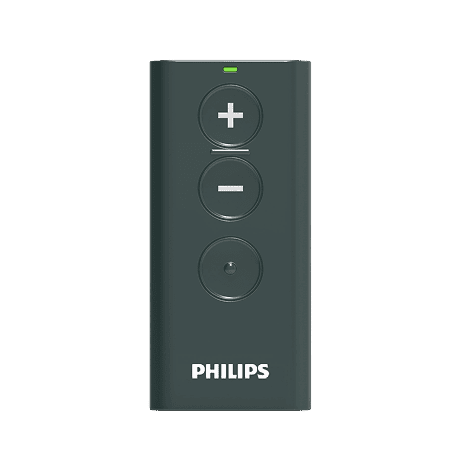
hearing aid remote control
Remote Controls
Today’s hearing aids can already make incredible calibrations based on your preferences and surroundings. But with a remote control, you can also adjust volume, answer your phone, switch programs, and listen to your tablet, all with the mere touch of a button. Remote controls are available as small, pocket-size units.
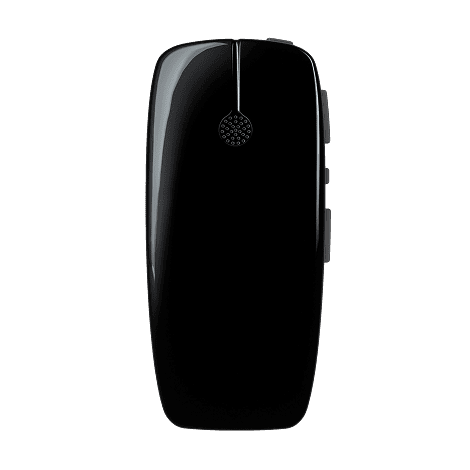
hearing aid microphone
Microphones
A clip-on microphone is a small, discreet accessory that sends audio to your hearing aids. It can be placed on a table or clipped to clothing, anywhere within close range of the speaker's voice. They are optimal for hearing in extremely noisy situations.
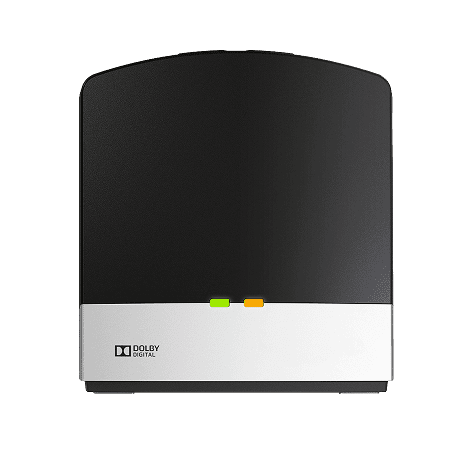
tv streamer device for hearing aids
TV Streamers
A TV streamer is a small box that connects to your TV, sound system or computer that transfers high-quality sound straight to your hearing aids.

For more information on hearing aid accessories or to learn about other products compatible with your hearing aids, call or visit any of our Costco Hearing Aid Centers. Find the Costco Hearing Aid Center near you.
Hearing Aid Styles
Take a minute to explore the different types of hearing aids. They're no longer just improving quality of life; they're setting an entirely new standard for living.
Shape and Fit
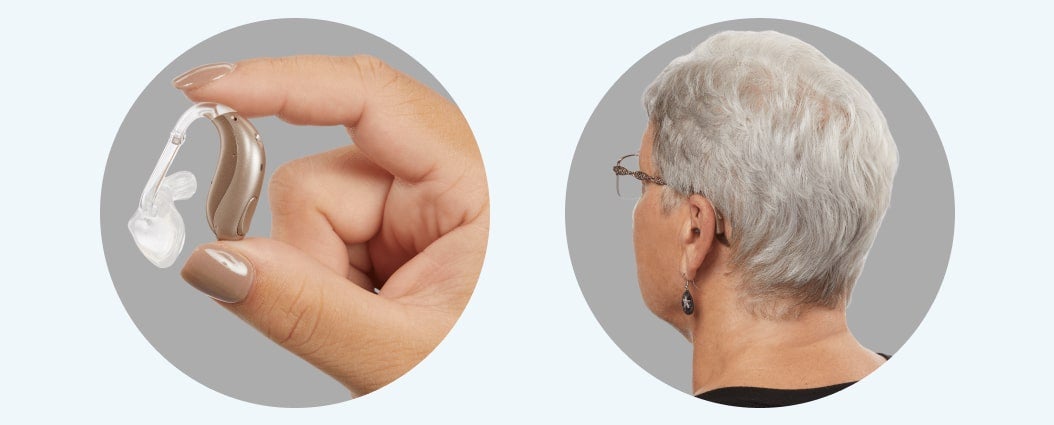
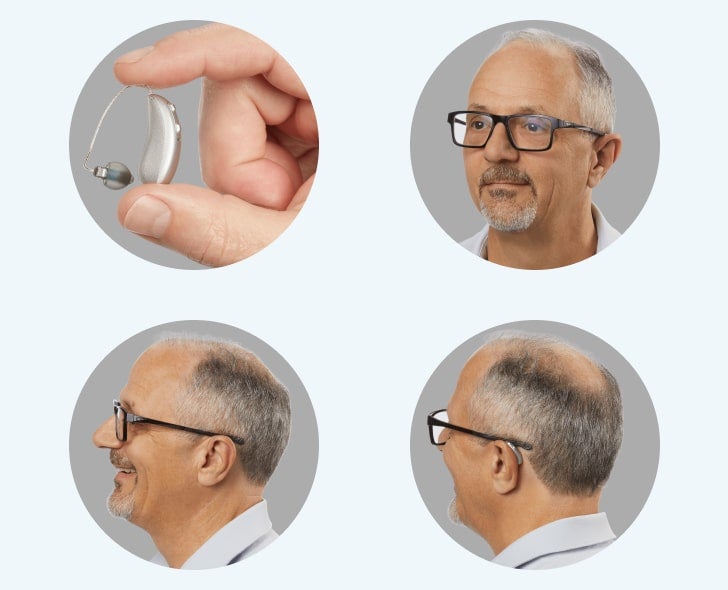
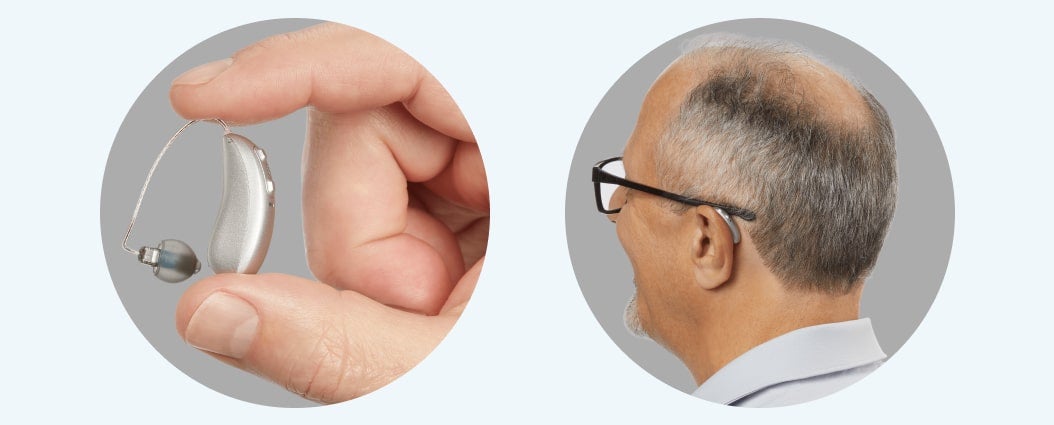
Hearing aids are available in several different styles, including receiver in the canal (RIC), in the canal (ITC), in the ear (ITE), and behind the ear (BTE). The style of hearing aid that will work best for you will be determined by your level of hearing loss, specific needs, and personal comfort level.
man wearing receiver in the canal hearing aidsman wearing receiver in the canal hearing aids
Receiver in the Canal (RIC)
Worn behind the ear, with a thin tube to the ear allowing for natural sound. (mild to severe hearing loss)
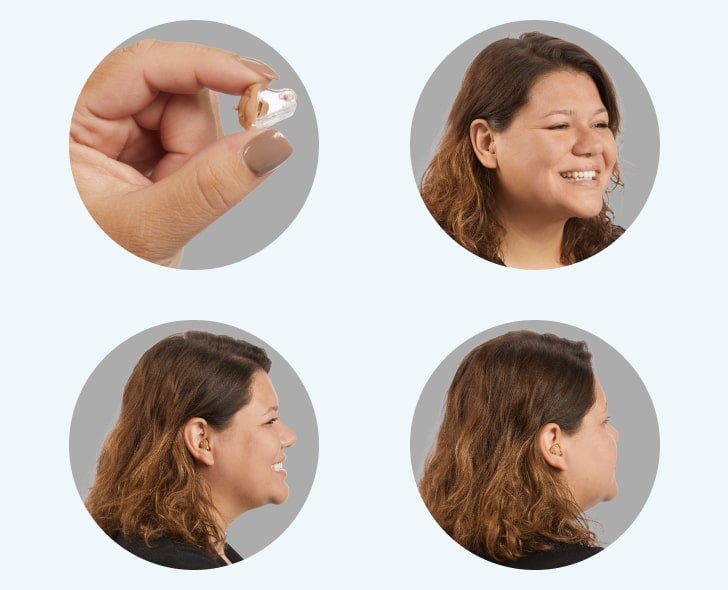
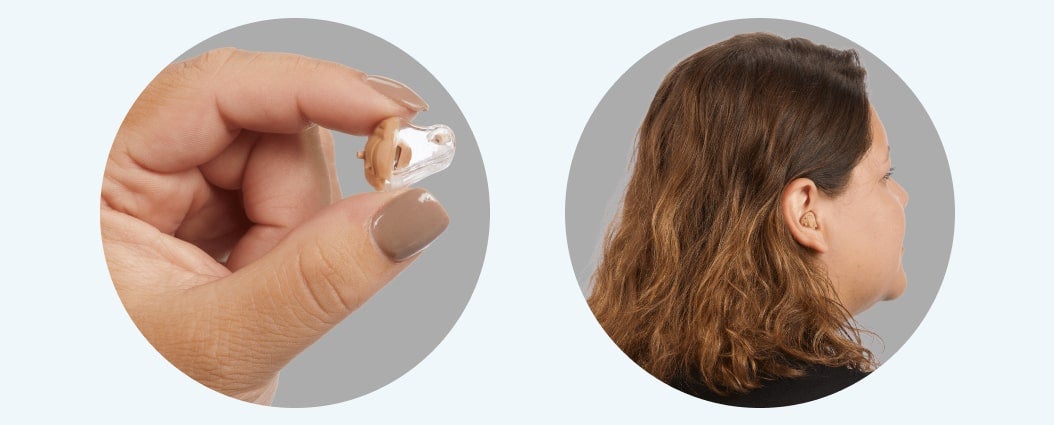
In the CanalIn the Canal
In the Canal (ITC)
Custom-molded to fit in the ear canal and a small portion of the outer ear. (slight to moderate hearing loss)
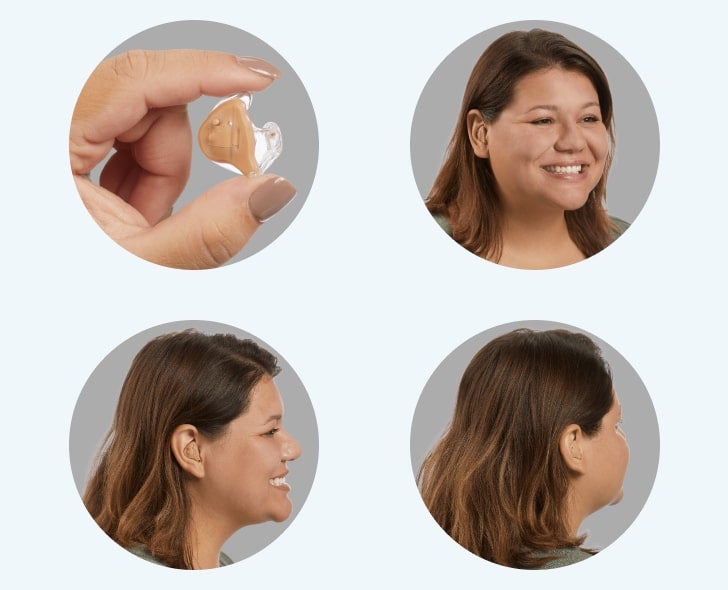
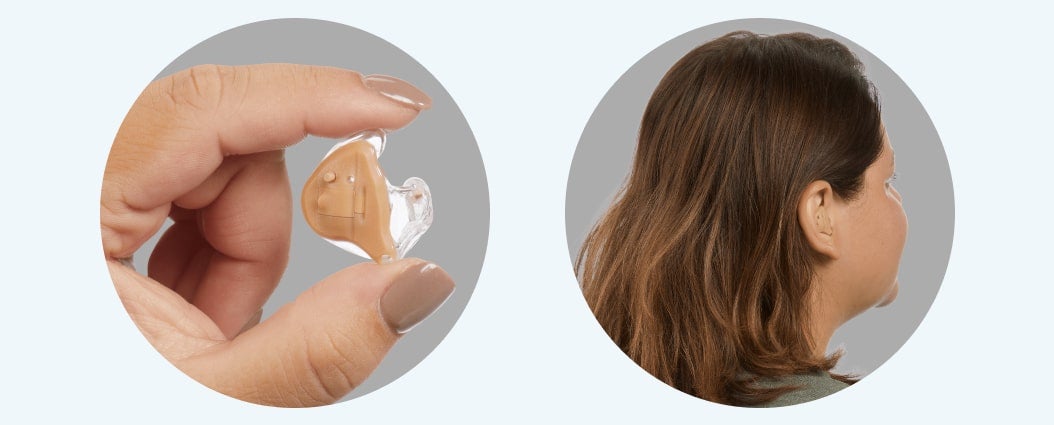
In the EarIn the Ear
In the Ear (ITE)
Custom-molded to fit in the ear, usually filling up most of the outer ear. (mild to severe hearing loss)
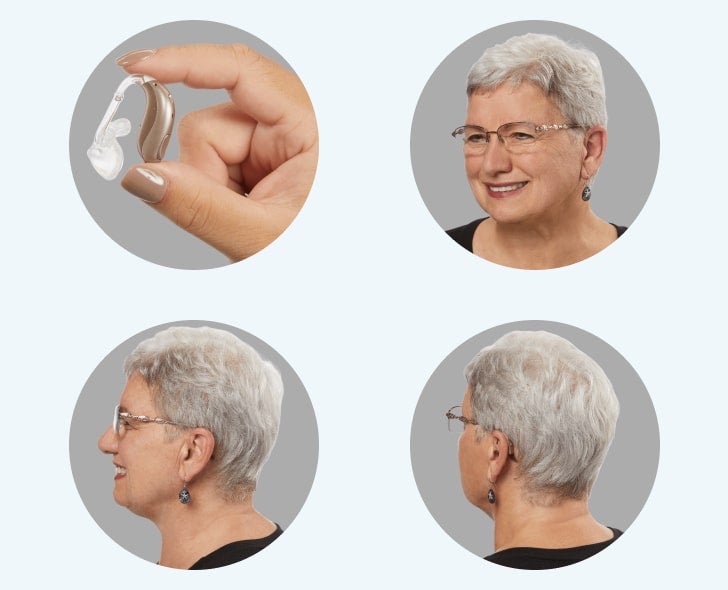
Behind the EarBehind the Ear
Behind the Ear (BTE)
Worn behind the ear and attached to a custom-fitted ear mold. Standard and open fit available. (mild to profound hearing loss)

Hearing Aid Battery Information

Battery Storage Safety
Packaging

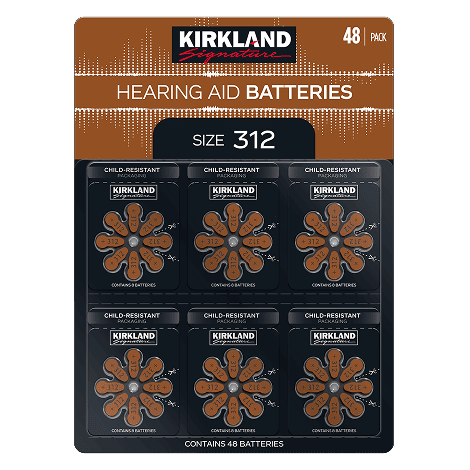
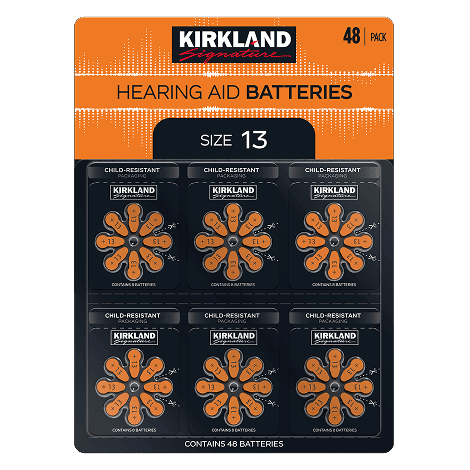
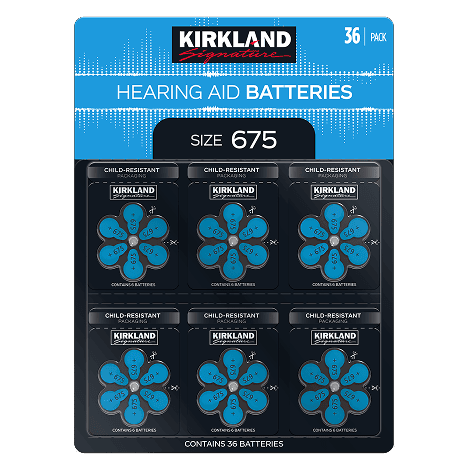
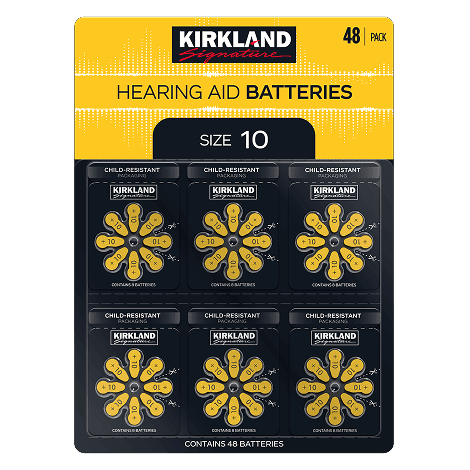
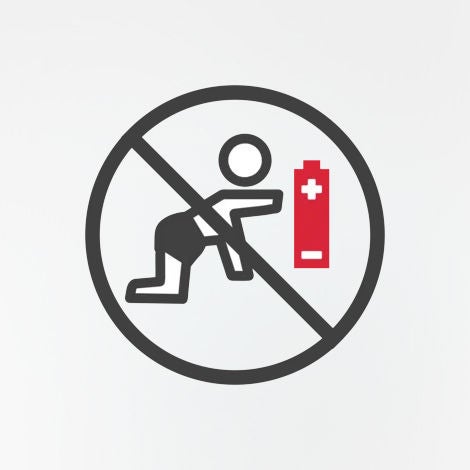
Battery packaging must meet Reese's Law legal requirements to enhance child safety standards for button batteries. The law requires manufacturers to implement stronger safeguards and the use of scissors to open the packaging to prevent exposure to swallowing hazards.
Battery Storage Safety
Safety
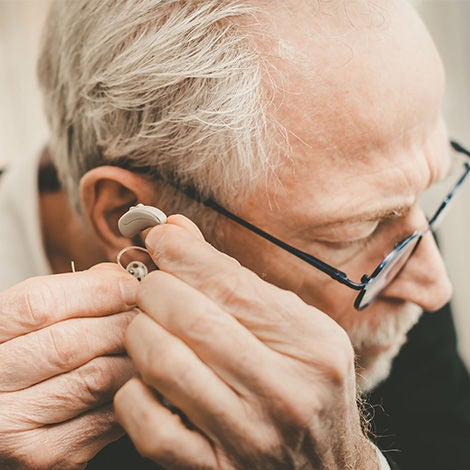
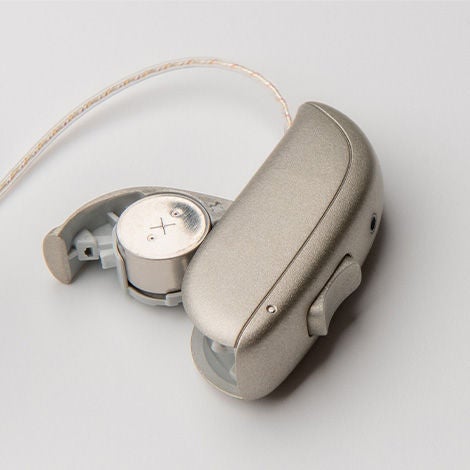
Batteries contain dangerous chemicals and must be handled and disposed of with care. Store and discard batteries out of reach of infants, children, and pets. Always supervise children who wear hearing aids, and consider choosing hearing aids with secure battery compartments. If a child or pet swallows a battery, or if a child inserts a battery into their ear or nose, seek emergency care immediately.
Storage Safety
Storage
Batteries should not be carried loose in your pocket or purse, and should not be stored out of the package. If a battery comes into contact with a metal object such as coins, keys or other batteries, the battery may short out, leak or even rupture. Do not leave the battery in the hearing aid when putting it into a dry box overnight.
Schooled for Excellence
Learn more about the Costco Hearing Aid Centers and the expertise required to become a hearing aid specialist as featured in the Costco Connection magazine.
Hearing & Cognitive Health
Why Does Hearing Loss Matter?

Hearing loss can be a challenging reality, not only for those who experience it but also for their loved ones and friends. Its impact extends far beyond a worsened ability to hear.

Science has shown that hearing loss can lead to social isolation, loneliness and depression. As well as physical issues with balance, and cognitive decline — even a greater risk of dementia.

By the Numbers

1,500,000,000 people have some degree of hearing loss
1,500,000,000
People have some degree of hearing loss
2-in-3 people over age 60 experience hearing loss
2-in-3
People over age 60 experience hearing loss
430,000,000 people require rehabilitation to address their hearing loss
430,000,000
People require rehabilitation to address their hearing loss
The Good News
The good news for hearing loss is that some cases are preventable, while others can be addressed through early diagnosis, good hearing care and suitable hearing strategies. Hearing care solutions, such as hearing aids, are designed with safety in mind and have a positive impact on our ability to communicate and engage with others.
Backed by Science
A groundbreaking study found that in people aged 70-84 at risk of cognitive decline, hearing intervention slowed the loss of thinking and memory abilities by up to 48% over a three-year period.
5 Everyday Benefits of Hearing Aids
  • Overall Health and Wellbeing: Taking control of your hearing can positively impact your health and overall quality of life.
  • Good Brain Health: Hearing aids have been shown to support better brain health and may reduce cognitive decline.
  • Less Loneliness: A well-managed hearing loss enables people to reconnect with family, friends, and colleagues.
  • Better Mental Health: By breaking the cycle of isolation, hearing care directly contributes to improved mental health. quality of life.
  • More Productivity: Having a hearing loss addressed can often benefit people’s professional life and productivity.

Frequently Asked Questions

How do I know if I need hearing aids?

Self-Evaluation

  • You frequently turn up the volume on your TV, tablet, or phone.
  • You have difficulty hearing conversations, particularly in noisy environments.
  • You often ask people to repeat themselves, or you rely on someone close to you to repeat what others say.
  • You study people's faces as they're talking, so you can fill in the gaps by reading their lips or expressions.
  • You often have trouble understanding the person at the other end of the phone.
  • You find yourself participating less in conversations, even with family and friends.
  • You have difficulty hearing high-pitched sounds, like doorbells, devices beeping, or children's voices.
If you saw yourself, or a loved one, in more than a few of the examples above, it may be time to have a hearing test done to address any concerns.
Hearing loss, like your thumbprint, is very individualized and unique. There are several tests that can be run to determine your level of hearing. Those tests will serve as the foundation for the hearing aid recommendation you will receive from your Costco hearing aid dispenser.
Most hearing loss is the result of the natural aging process, but it can also be caused by other factors like noise exposure, illness, head trauma, genetics, and some medications. The average hearing loss can be effectively addressed with hearing aids, substantially improving an individual’s ability to hear and take part in daily activities. It is well worth getting your hearing tested at least once a year, to make sure you are getting the help you need, sooner rather than later.
How do I schedule a hearing test?

Contact the nearest Costco Hearing Aid Center to schedule a hearing test appointment. Please print and complete a Hearing Aid Member Intake Form, and bring it in with you to your appointment.

How will my hearing be tested?
Licensed hearing instrument specialists complete the hearing test in a sound-treated room to determine if hearing aids can help. The process begins by gathering important information in a confidential intake form to evaluate your hearing health, medical history, history of noise exposure, and lifestyle needs. Next, an otoscopic examination (view the inside of your ear canal and eardrum) will be performed to ensure that excessive ear wax is not a factor. Once that's ruled out, we will assess your hearing capabilities. During the test, the professional will play sounds at different frequencies and ask you to respond when you hear them. The goal is to identify your thresholds or lowest levels at which you can hear those sounds at different pitches. A series of speech tests will confirm your threshold for speech and determine how well you recognize speech when it is loud but okay. After the test appointment, the provider will offer options or make a referral to a physician, if indicated.
What happens after the hearing test?
Costco's hearing aid staff will let you know whether hearing aids might be able to help you. We'll work with you to find the most appropriate solution for your lifestyle and help you through the entire process, from testing and fitting to follow-up visits.
Can hearing aids connect to my phone?
Many models can be connected to a mobile phone allowing you to stream phone calls or music. They also include features like special noise reduction, feedback cancellation, or multiple listening programs that can be adjusted through the mobile app. If you have a very active lifestyle, you should inform your hearing aid professional so that they can take that into consideration when they make their recommendations for you.
What is the best kind of hearing aid?
There is no one best kind of hearing aid. Our hearing aid staff can explain the different types of hearing aids, and will select the type of hearing aids most closely matched to your hearing loss, the anatomy of your ear, and your lifestyle.
Costco works with several major hearing aid suppliers and offers a variety of styles, from tiny in-the-canal models to behind the ear hearing aids. Each style has specific performance characteristics that will be taken into consideration when you receive a recommendation. The tiniest hearing aids are not right for everyone, nor does everyone need the most powerful kind of hearing aid. If you have questions about which style is right for you, the Costco hearing aid staff can explain the pros and cons of each individual style.
What can I expect from my hearing aids?
Hearing aids are designed to improve your performance in most listening situations. Even a normal hearing person will struggle if the noise in the room is louder than the conversation, as they would at a loud party. Hearing aids are not a replacement for normal hearing, but there have been significant advances in recent years to make hearing aids work well in most situations.
How long will it take me to get used to wearing a hearing aid?

The length of time it takes to adapt to hearing aids will depend on how quickly you address your hearing loss. Research shows that most people can adjust to hearing aids within 30 days, with regular use. That’s why it’s important to wear your hearing aids daily, so you can adapt more quickly and more completely. Be patient during the adjustment period. Remember that some sounds will be different, and you may need to adjust the volume level. Costco providers can program your hearing aids to gradually increase the amplification over a customized period of time, to help you adjust to hearing sounds that you may not have heard for a long time. If you have questions or concerns, don’t hesitate to contact your local Costco Hearing Aid Center.

Compare region updated
0